
Head Office:
Level 2,
135/153 New South Head Road,
Edgecliff New South Wales 2027 Australia
Mail:
PO Box 720, Rose Bay,
New South Wales 2029 Australia


REDARC DEFENCE & SPACE: DESIGNING POWER SOLUTIONS FOR EXTREME ENVIRONMENTS
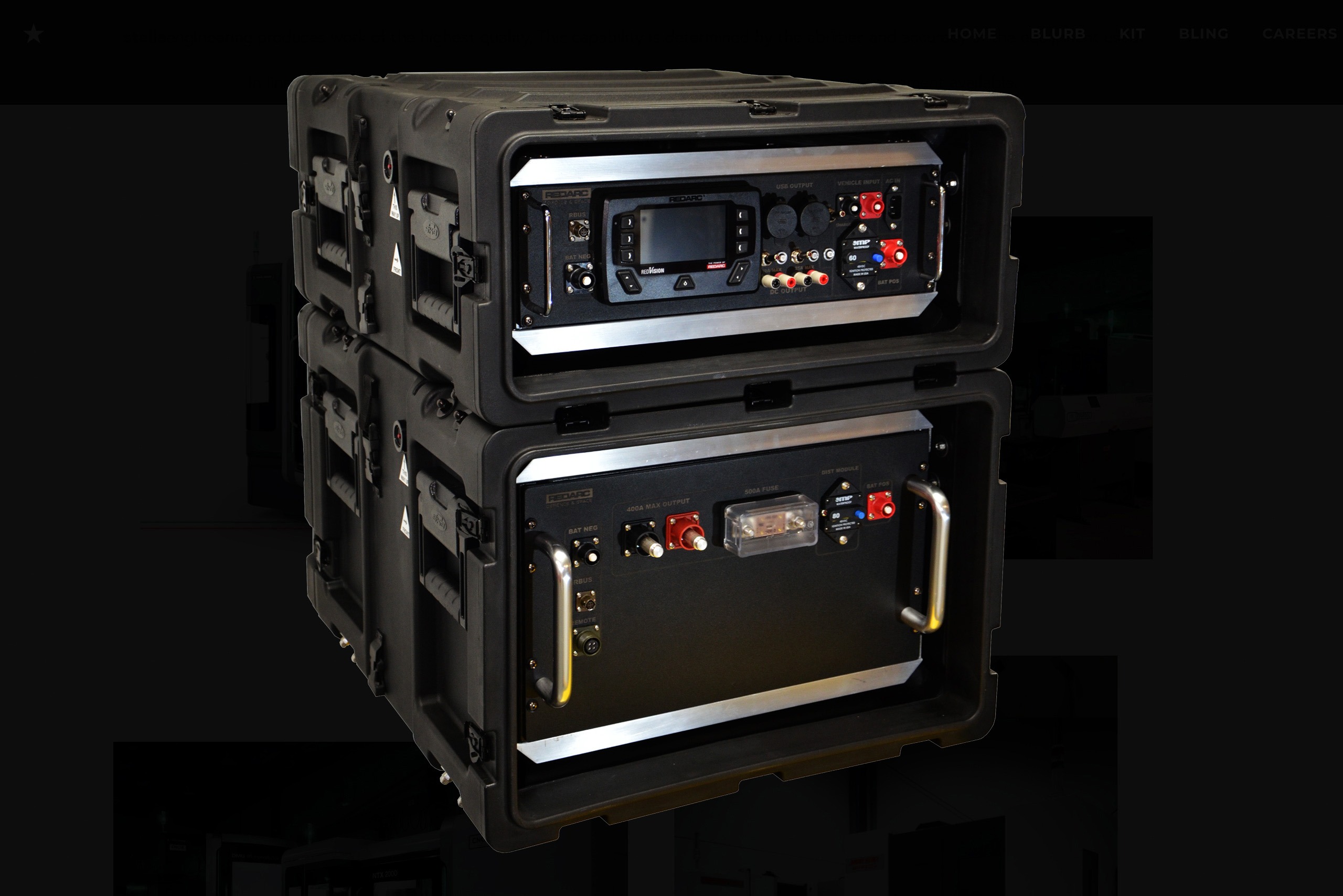
REDARC Defence & Space (RDS) is the defence-oriented division of the South Australian electronics manufacturer REDARC Electronics, a company long recognised for its rugged, reliable power systems used across four-wheel driving, caravanning and off-grid recreational sectors. The Defence & Space division extends this capability into military and space markets, leveraging the broader organisation’s intellectual property, engineering depth and advanced manufacturing facilities.
As Executive General Manager Scott Begbie explains, the division exists “to leverage the IP that comes out of the REDARC group, everything from electronic design to surface-mount manufacturing lines, EMC test chambers, shock and vibration capabilities, and the know-how of how to manufacture product”. This foundation enables REDARC to design and produce silent, modular, mission-critical power systems for defence customers in some of the harshest environments in the world.
Their identity as an Australian manufacturer is a strategic advantage; products designed to survive Australia’s dust, heat, rough terrain and remote conditions naturally meet the needs of global military clients. Being based in South Australia also enables close collaboration with local suppliers, rapid response to issues, and deep integration with regional industry capabilities. The company embraces its position as both a sovereign capability builder and a global competitor from the moment its products leave the factory floor.
RDS’s Design Process: A Culture of Curiosity, Access, and Rapid Validation
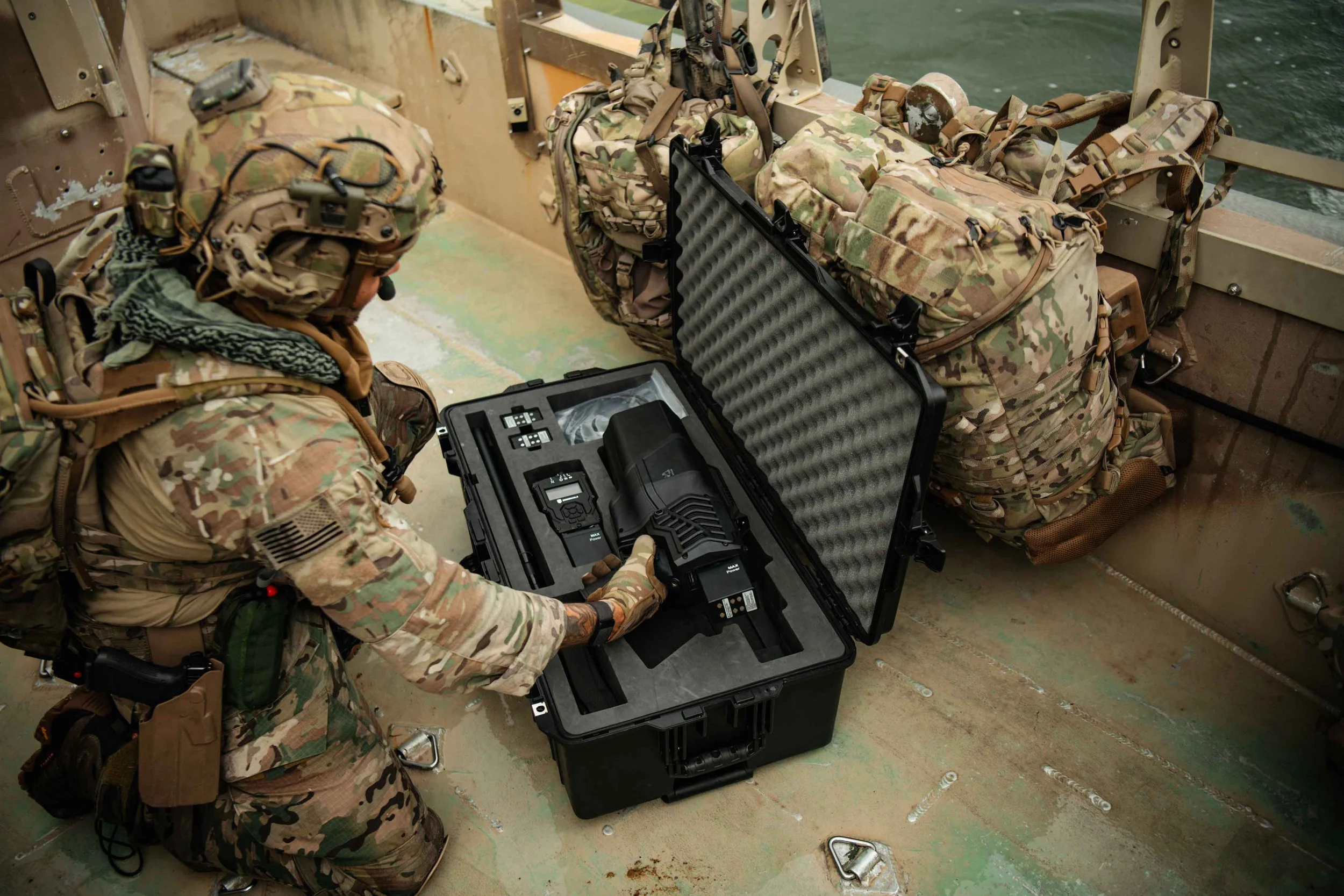
The design process is grounded in a culture that values challenging the norm, and curiosity over rigid specification-driven development. Rather than accepting requirements at face value, their engineers dig into the lived conditions behind them—understanding how war-fighters operate in gloves, harsh weather, or high-stress situations where small failures carry big consequences in mission critical environments.
For RDS, design begins with asking why a problem exists and uncovering the subtle field experiences that never appear in formal documentation.
When it is not possible to directly access frontline users, RDS have built a creative ecosystem of “proxy” customers who act as windows into the real operational environment. Defence primes, robotics teams, and Army concept-development units provide fragments of insight, stories of equipment failures, ergonomic frustrations, and emerging needs. RDS brings these fragments together to build a much clearer picture of the actual user context than specifications alone can offer.
Trade shows and industry events serve as some of their richest research settings. RDS attendance prioritises learning, bringing prototypes and “art of the possible” concepts to provoke conversations. These artefacts spark candid dialogue about what operators wish equipment could do, revealing deeper needs and constraints. Often the most valuable insights arise in the informal conversations that happen after hours, where industry participants speak more openly about their challenges.
RDS converts these insights into real learning through rapid prototyping. Instead of year-long development cycles, they often deliver near-functional prototypes within weeks, knowing that interaction with a physical object reveals far more than theoretical planning. This iterative loop, insight, prototype, feedback, refinement, lets REDARC deliver solutions faster and more accurately than traditional defence pathways.
Beneath the process is a culture that encourages problem-solving, experimentation and continuous questioning. Engineers are mentored to take informed risks, test assumptions early, and see imperfect prototypes as essential learning tools. The core message is clear: you don’t need direct access to users to innovate. With curiosity, creativity and disciplined iteration, companies can uncover deep insights and build more competitive products—often before a traditional development process has even begun.
RDS’s impact is substantial, but what distinguishes the company is the way design thinking sits at the centre of how this impact is created. Their design approach — grounded in curiosity, rapid iteration and a deep sensitivity to user context — directly shapes their economic performance, community contribution and environmental responsibility.
Economically, RDS shows that design-led innovation can sustain high-value manufacturing in Australia. Their emphasis on modularity, configurability and rapid prototyping allows them to respond quickly to emerging defence needs, avoiding the long, linear development cycles that often limit Australian firms. This agility is a design capability, not just a manufacturing one.
By designing products that can be updated, adapted and integrated across platforms, RDS maintains relevance in a sector defined by shifting priorities and long procurement timelines. Their design mindset also underpins their build-to-print business model: because they design for manufacturability and reliability, they have become a trusted partner for other defence companies, helping them scale production and lift overall industry capability. Their commitment to South Australian suppliers is strengthened by this design philosophy — local supply chains allow for tighter feedback loops, faster iteration, and better control over quality and environmental performance.
Social impact also emerges directly from their design culture. REDARC’s ethos of questioning, listening and understanding user needs extends to how they engage with their community. Their support for veterans, local charities and organisations like Orange Sky is not a marketing exercise but an expression of the company’s design values: solve real problems for real people. When they provide power for mobile laundry trailers or support canine therapy units with specialised systems, they are applying the same human-centred design logic that guides their defence work. Internally, their design-led culture shapes their hiring and mentoring. They deliberately seek people who fit a mindset of curiosity and problem-solving, building a workforce capable of adapting to fast-changing challenges — a social impact that strengthens South Australia’s engineering talent base.
Environmental impact, too, is closely tied to design decisions. REDARC embeds sustainability at the earliest stages of product development, focusing on long life cycles, repairability where feasible, responsible battery management and minimal packaging. Their facilities integrate solar generation and recycling practices not because regulations demand it, but because design — as they practice it — requires thoughtful stewardship of resources. Even within the constraints of defence standards, REDARC pursues modular solutions that reduce waste and extend operational life. Their design process aims to ensure that products survive extreme Australian conditions, which naturally promotes durability and reduces unnecessary replacement and disposal.
Across all dimensions, REDARC’s impact is amplified because design is not a department — it is their operating system. The same principles that help them uncover war-fighter needs also help them strengthen local industry, support veterans, and reduce environmental harm. In REDARC’s case, design does not simply shape products; it shapes the way the company contributes to its community, its economy and the environment.
REDARC’s story demonstrates that design-led innovation is achievable for Australian businesses of all sizes. Their experience shows the power of being present in industry conversations, asking better questions, engaging with ecosystems, and treating prototypes as tools for insight rather than polished outcomes.
It illustrates the importance of building cultures that support experimentation, celebrate wins, and value human-centred learning. Most importantly, it offers a blueprint for how design can drive meaningful economic, social and environmental impact — and how, with the right structures and mindsets, Australia can build a future defined by design-led capability.
REDARC’s journey offers compelling insight into what a design-led nation might look like. This vision relies on cultivating a national mindset that values experimentation, curiosity and iterative learning.
REDARC encourages its engineers to take calculated risks, reflect on their wins, and build confidence through real-world outcomes, the same cultural attributes Australia must foster more broadly if it is to grow design-led industries.
A design-led nation is one where companies, governments and communities collaborate around real problems; where capability sits close to customers; and where innovation is fuelled by networks of trust, skill and shared ambition.
Head Office:
Level 2,
135/153 New South Head Road,
Edgecliff New South Wales 2027 Australia
Mail:
PO Box 720, Rose Bay,
New South Wales 2029 Australia
Phone:
+61 2 8015 6680
